My Lip Fillers Migrated 6 Weeks Before My Wedding.
Six weeks before my wedding, I woke up with a lump under my bottom lip that had not been there when I went to bed.
I had gotten lip fillers three days earlier.
A full syringe of Juvederm, $800 out of pocket, because I wanted my lips to look fuller in the photos.
The lump was firm and visible, sitting right below the lip line on the left side.
When I pressed on it, it moved.
That is filler migration. The hyaluronic acid had shifted away from where it was injected and settled somewhere it did not belong.
I called the clinic that morning.
They told me it sometimes happens, and offered to dissolve it for another $350.
I Had Spent Two Years Watching My Lips Disappear
I was 34 and engaged.
My lips had been thinning since my late twenties, and I noticed it every time I looked at a photo.
The lip border that used to be sharp had faded into my skin.
Vertical lines had started forming above my top lip, catching lipstick and dragging it upward in tiny feathery streaks.
I stopped wearing bold lip colors.
I started lining outside my natural lip line with concealer tricks I found on TikTok, and they looked obvious in person.
My fiance's sister had gotten fillers for her wedding and her photos looked stunning.
So I booked the appointment, handed over $800, and sat in the chair hoping it would be worth it.
The Graveyard of Everything I Tried First
Before the fillers, I had tried everything short of a needle.
Lip plumping glosses from Too Faced and Buxom that stung for 20 minutes and wore off before I finished my coffee.
A Laneige Lip Sleeping Mask that made my lips softer but did nothing for volume.
A $199 GloPRO microneedling device that a beauty blogger swore by.
I used it for 8 weeks, replaced the head twice at $30 each, and could not see a difference worth $259.
A $40 peptide lip serum from the department store that promised "visible plumping in 14 days."
Fourteen days came and went without a single visible change.
I had spent over $350 on products that sat on the surface of my lips and wiped off.
Every single one failed for the same reason: only 5% to 10% of topical ingredients penetrate the skin barrier.
The products were not bad. My skin was blocking them.
The Morning I Saw the Lump
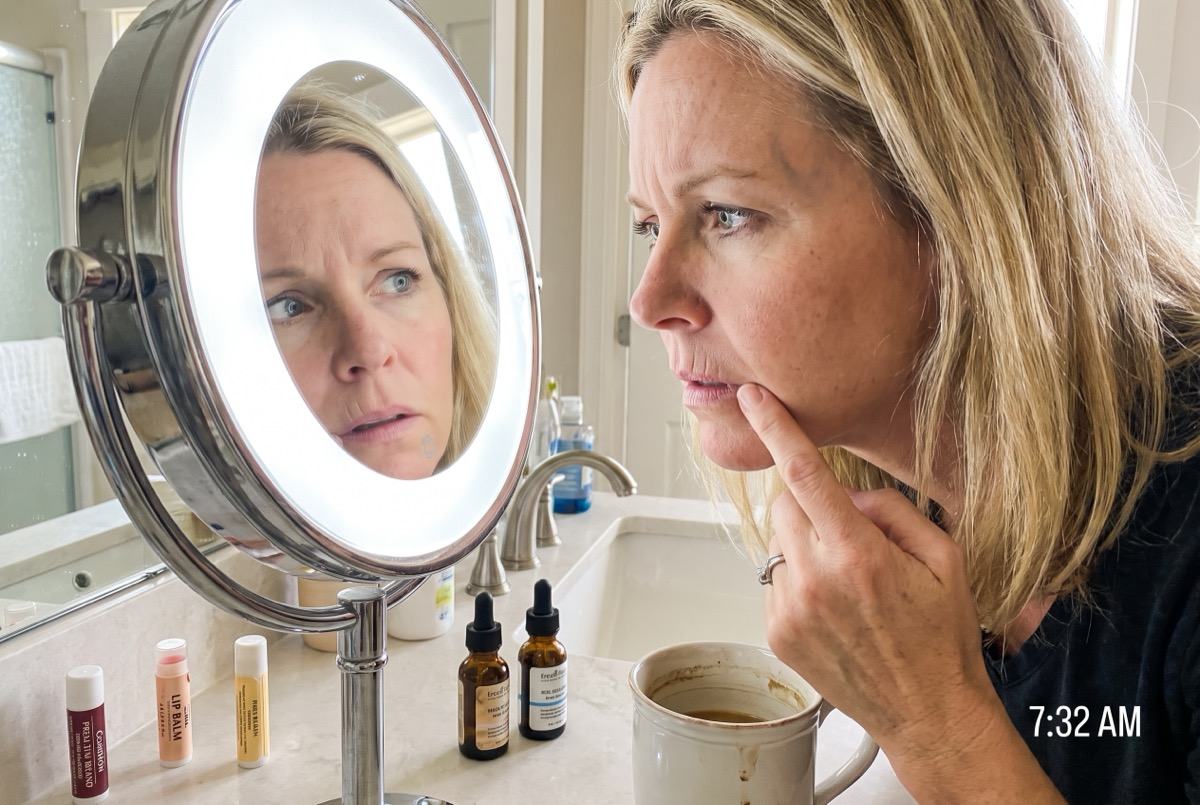
I stood in the bathroom holding my phone camera two inches from my face, zooming in on the lump under my lip.
My wedding dress fitting was in 10 days.
I had paid $800 to look better in my wedding photos.
Now I had a visible lump, bruising along my lower lip, and the clinic wanted another $350 to fix what they had done three days ago.
I was furious.
Not frustrated. Furious.
The clinic acted like migration was a minor inconvenience. I had spent $800 on something that needed a $350 correction within 72 hours.
And here is what I realized: the entire filler industry is built on a maintenance model. $600 to $1,200 per syringe, every 6 to 12 months, forever.
They do not want a permanent solution. A woman who rebuilds her own collagen is a woman who stops coming back. The unreliable results are not a flaw in the system. They are the system.
I had a wedding in 6 weeks and a face I could not control.
The thing I feared more than thin lips was looking fake, and now I had both problems at once.
My Bridesmaid Handed Me a Small White Box
Three days after the lump appeared, I paid the $350 to have the filler dissolved.
My lips went back to the way they looked before, thin and lined, minus $1,150.
That weekend my bridesmaid Kara came over for a dress rehearsal.
She noticed my lips looked different from the last time she'd seen me.
I told her everything. The filler, the migration, the dissolving, the $1,150.
She reached into her bag and pulled out a small white box.
"I've been using this for two months. Same 24K gold needles the clinics use, at $300 to $500 a session. This one is $36."
It was the Glamory MicroLift.
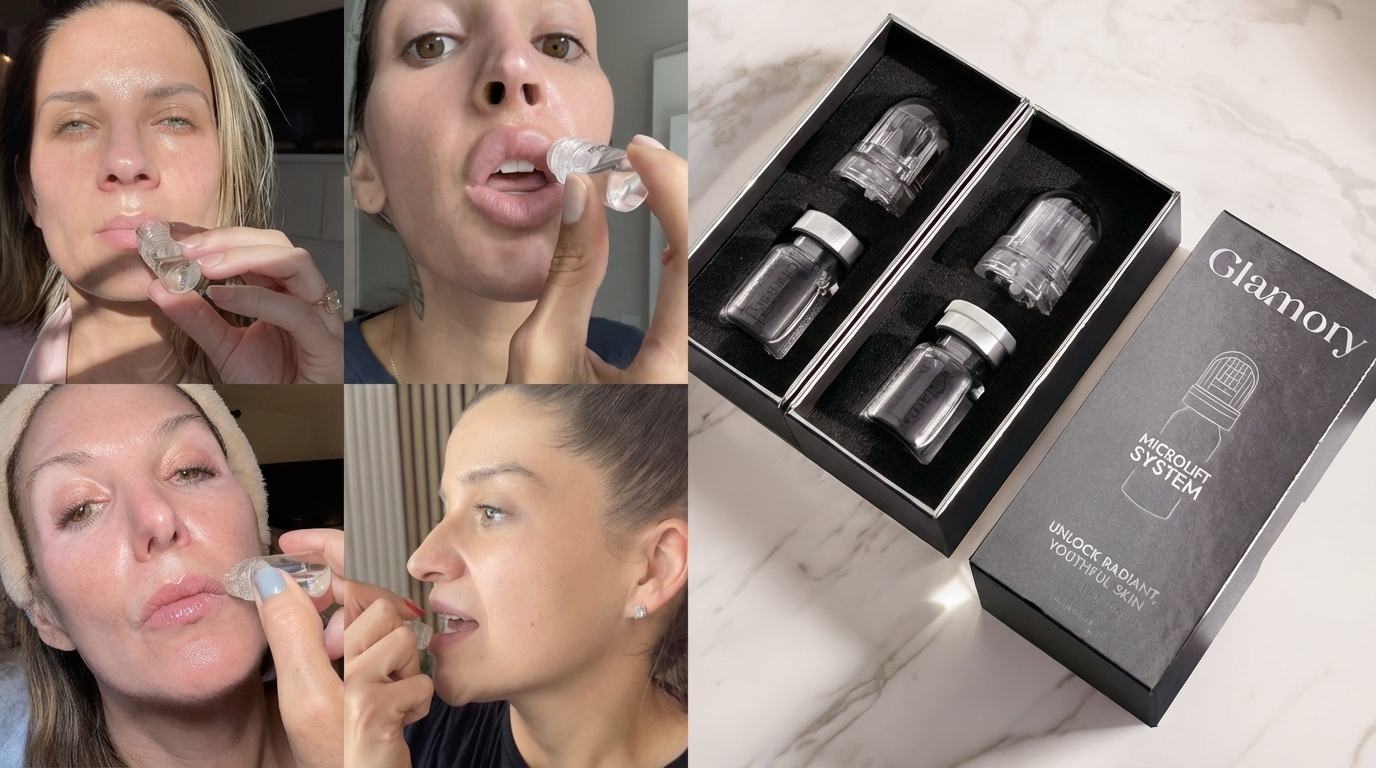
A micro-infusion device with 0.5mm gold-plated needles that feeds a collagen-boosting serum through the needles directly into the dermis while you roll.
She said her lips were fuller than they had been in years, and nobody had asked if she'd gotten work done.
The volume came from her own collagen, not a filler that fades on a schedule.
I ordered one that night.
The First Week: I Almost Gave Up
The device arrived on a Tuesday.
I attached the serum vial, rolled it across my lips for 5 minutes, and waited.
There was a mild tingling that lasted about a minute.
No stinging, no burning, no redness after the first few minutes.
By day 3 I could not see a difference and almost put it in a drawer.
But Kara had warned me the collagen response takes 2 to 3 weeks, so I kept going.
On day 5, I ran my finger along my lip border before bed and stopped.
The edge felt sharper. It was subtle, but I could feel a ridge I had not felt in years.
I took a photo and compared it to one from the week before.
The lip line was slightly more defined, and the vertical lines above my top lip looked softer.
Something was happening beneath the surface.
Why This Worked When Everything Else Failed
I spent two nights reading the research.
Here is what I learned about why every lip product I had tried before was fighting biology.
Lip tissue has no sebaceous glands, making it the worst surface for absorbing topical products.
Only 5% to 10% of what you apply to your lips ever gets past the outer barrier to reach the dermis, where collagen lives.
The MicroLift does two things at once: the 0.5mm gold-plated needles create micro-channels through the barrier, and the integrated serum feeds directly through the needles at the same time.
The serum does not sit on top and wait for the channels to close. It goes in while they are open.
Research published in the Journal of Clinical and Aesthetic Dermatology shows that microneedling increases collagen type I production by 400%.
The same 24K gold needle specification is used in dermatology clinics at $300 to $500 per session.
Using a lip plumper is like pouring water on a sealed jar and hoping it gets inside. The MicroLift opens the jar first.
Is it perfect? No. It will not give you the dramatic overnight volume of injectable filler.
The roller heads need replacing every 6 to 8 uses. And if you want extreme volume that only a syringe can produce, this is not the product for you.
But if you want your own collagen rebuilding your lip volume gradually and permanently, without a clinic bill, without pain, and without the risk of looking overdone, this is the only device that delivers serum directly through the needles while triggering collagen at the same time.
Four Weeks Later, My Lips Looked Like Mine Again
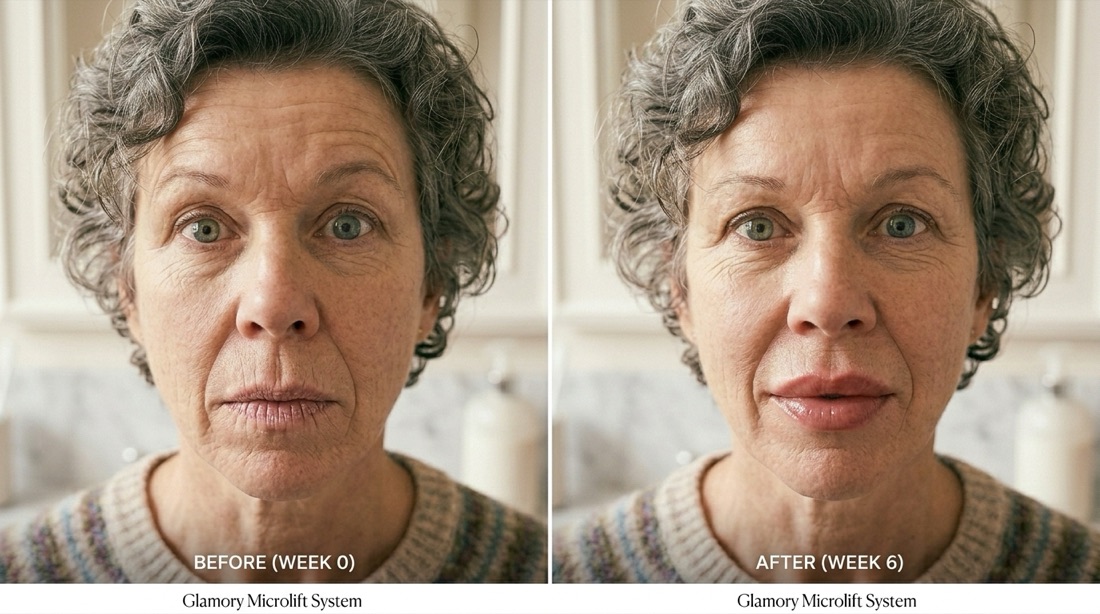
By week 3, the lip border was back.
The cupid's bow I had lost in my early thirties was visible again without liner.
By week 4, my lips were fuller than they had been since my twenties, and the vertical lines above them were barely visible.
I could wear lipstick without it bleeding into the creases.
At my final dress fitting, my seamstress said, "Your face looks different. You look younger."
She could not pinpoint what had changed. Nobody could.
That was the difference.
The filler had changed my face in a way that people noticed and questioned. The MicroLift changed it in a way that people noticed and complimented.
I looked like myself. The version of myself I had been missing.
Other Women Saw the Same Thing
After my wedding I started telling friends about it.
When I looked for other women's experiences, the same patterns kept showing up.
"Three weeks with the Microlift and my lip border came back. My lips look plumper and more defined. I have gotten more compliments in three weeks than in two years of lip gloss."
"I used to get fillers, but I wanted something more natural. Microlift gave me the same plumpness and definition, without the pain or cost!"
"After a few uses, my lips went from dry and thin to full and hydrated. The results last, and my lips have never felt this soft."
"I was skeptical at first, but after 2 weeks, my lip border came back. Visibly fuller, and the serum absorbs so much better through the micro-channels."
"Ditch the fillers. There is a better way to get plump and youthful lips."
Fuller lips, softer lines, and not a single needle or clinic visit between them.
The same thing kept happening: women were getting asked if they had gotten work done, and the answer was no.
This is the link I used. 30 days to see the difference or your money back.
Editor's Note
Lauren's story resonated with our editorial team because the numbers are hard to argue with.
Lip fillers cost $600 to $1,200 per syringe, with maintenance every 6 to 12 months.
That is $1,200 to $2,000 a year to keep what you already paid for.
The Glamory MicroLift uses the same 24K gold needle specification that clinics charge $300 to $500 per session for.
A single treatment is $36. The best value bundle brings it down to $18 per treatment.
That is 1/20th the cost of a clinic session. At the best-value tier, it works out to less than $1.30 a day. Less than the coffee you drank this morning.
Six clinic filler sessions would cost $3,600 to $7,200. Six MicroLift treatments cost $108.
This is the only at-home device that delivers collagen-boosting serum directly through the needles while triggering your body's own collagen production. No other lip product on the market does both at once.
And it comes with the "Love Your Lips or It's Free" guarantee: use it for a full month. If your lips are not visibly fuller, you send it back and keep every dollar.
Glamory offers bundle pricing through their website.
Before we published this piece, we reached out to Glamory to let them know Lauren's story was going to our readers.
They agreed to hold that pricing for anyone coming through this article, along with the full 30-day guarantee.
We recommend the 6-treatment bundle for anyone who wants to see the full collagen-rebuilding effect. Lauren used it for 8 weeks before her wedding, which is two treatments from that tier.
I spent $1,150 on fillers that migrated, left bruises, and had to be dissolved 6 weeks before my wedding.
Glamory cost me $36.
My wedding photos are on my mantle, and every time I look at them I see the lips I thought I had lost for good.
Your lips lose roughly 1% of their collagen every year after 30. That process does not pause while you think about it.
Every month you wait is volume you cannot get back without a needle.
Try it for $36, with a full 30 days to see it work. If your lips are not visibly fuller, you pay nothing. The $800 filler appointment will still be there if you need it.
Get your MicroLift risk-free. 30 days to see the difference or your money back.
Comments
This page contains editorial content and paid promotion for the Glamory MicroLift System. Individual results may vary. These statements have not been evaluated by the FDA. This product is not intended to diagnose, treat, cure, or prevent any disease.