The First Sign Your Senior Dog Is Fading? It's The Back Legs.
Reviewed by Dr. Ilaria Bernotti, DVM, Veterinary Research Consultant
It starts small.
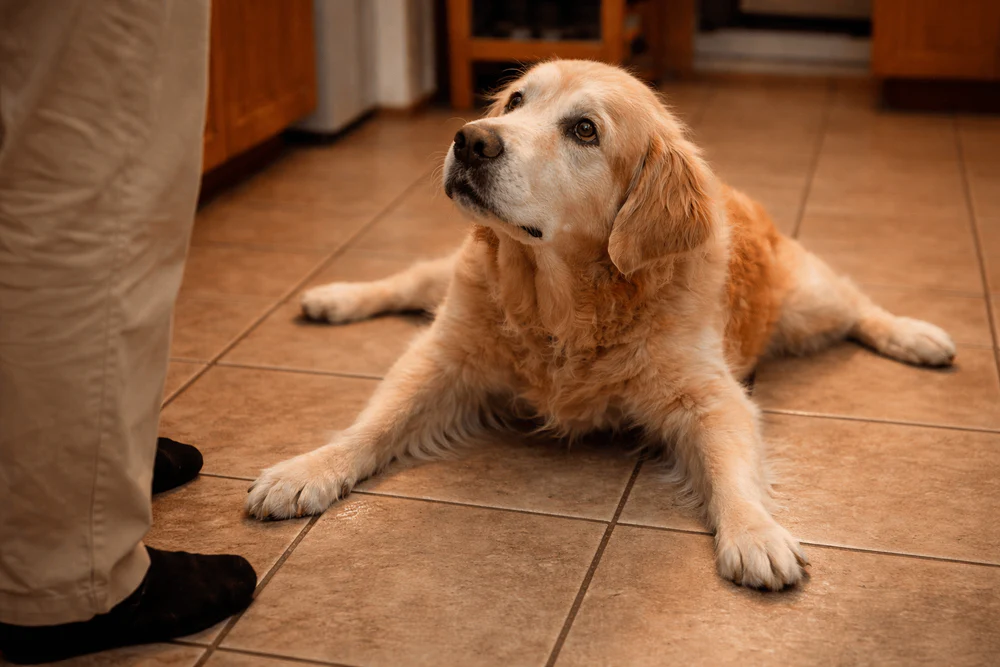
A hesitation before the jump into the car. A slight slip on the kitchen tile. The morning your dog can barely get up from the bed without help.
Then it stops being small.
One afternoon you watch your dog try to stand up, and the back legs splay out sideways. Your dog gets up, but it takes three tries.
The next week you find your dog at the bottom of the stairs, looking up, then looking back at you, then walking away.
If you're reading this, you've probably already Googled it.
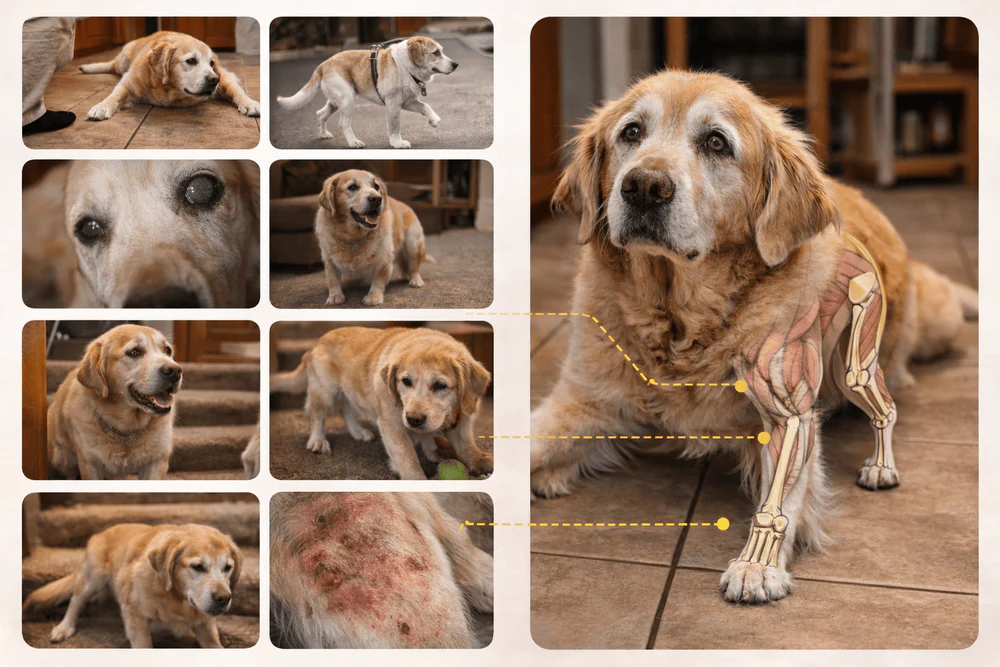
The 5 Diagnoses That Don't Solve the Problem
Open any senior-dog mobility article and you'll find the same five answers. None of them are wrong.
The problem is that a dog can be "managing" all five and still lose ground week after week.
Five different conditions, five different vet visits, and at the end of all of them, the dog is still slipping on the kitchen floor.
But there's one cause almost nobody talks about. It might be the most important one of all: cellular energy failure.
It's the driver beneath every diagnosis on that list, and it's what determines whether your dog gets stronger or keeps slipping further.
What Cellular Energy Failure Looks Like Inside Your Dog
Every muscle cell, brain cell, and joint cell runs on a tiny engine called a mitochondrion. The fuel it burns is a molecule called NAD+.
When NAD+ is full, muscles fire on command, the brain processes faster, and joints repair themselves between walks. When it runs low, everything slows. Then it stops.
In young dogs, NAD+ levels are abundant. In senior dogs, they crash.
By age 8, most dogs have lost more than 50% of their cellular NAD+. By age 11, the decline accelerates.
Low NAD+ means mitochondria can't generate the energy muscles need to fire. Cells weaken. Muscles atrophy. Joints absorb more impact because the muscles around them have thinned.
The dog moves less. Less movement means more atrophy. The cycle tightens.
This is cellular energy failure. The machinery to reverse it is still there.
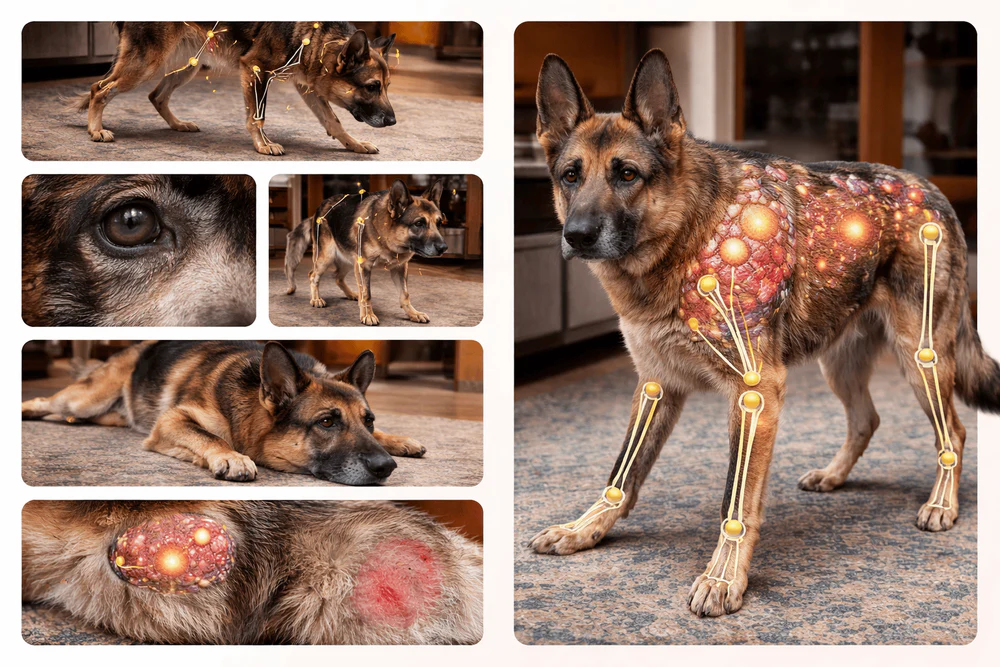
How 70 Senior Dogs Reversed Their Decline in 90 Days
For two decades, NAD+ has been one of the most-studied longevity molecules in human research.
Hundreds of peer-reviewed papers have shown how NAD+ depletion drives age-related decline across mammals. The science has been solid for years.
Researchers only recently brought that work to dogs.
In a 2024 study published in Scientific Reports, researchers tested an NAD+ precursor in 70 senior dogs over 90 days. The dogs showed measurable improvements in cognitive responsiveness, mobility, and energy markers, with no medication side effects reported.
A second 2024 study in Aging Cell found that NMN, the precursor compound that restores NAD+, improved cardiac function in aging dogs over a 12-week trial.
The studies point to the same conclusion: senior dog decline isn't permanent. The cellular machinery isn't broken. It isn't being fueled.
Reverse the energy failure. Get your dog back.
Within weeks, the whimpering when getting up stops. The eyes go bright again.
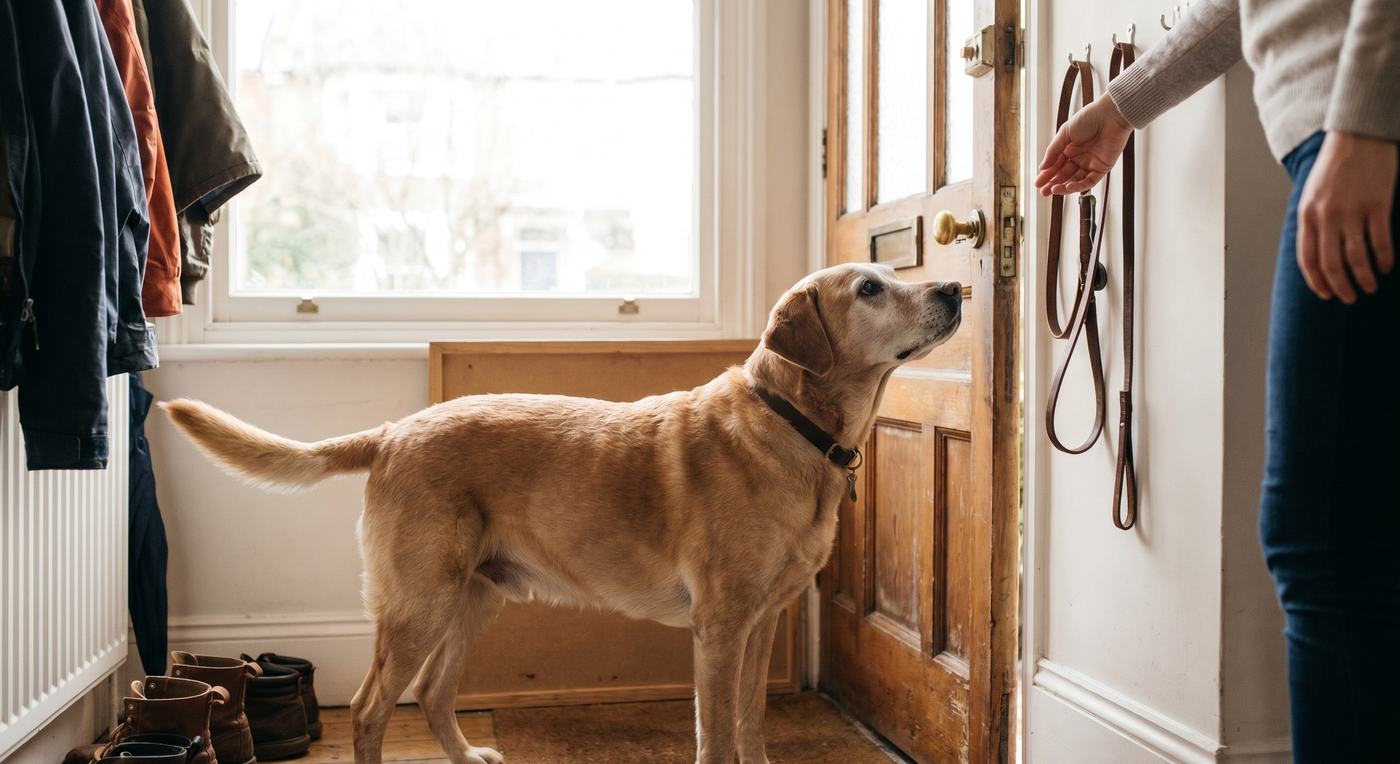
A toy reappears at the door before you've even reached for the leash.
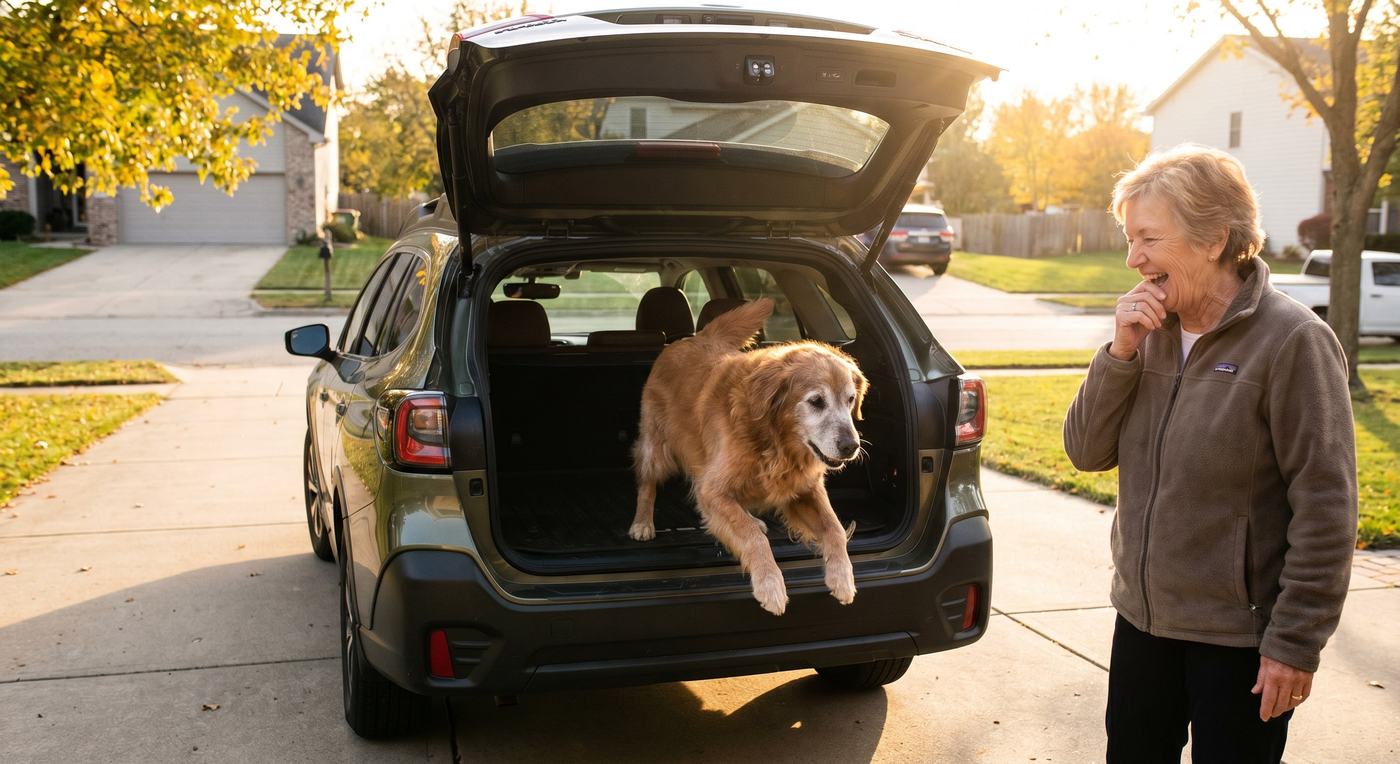
One ordinary morning, your dog leaps into the car without help. For the first time in months.

Two Dog Parents Who Refused to Give Up
Two devastated dog parents watched their own senior dog decline. Their vet had nothing left to try.
So they spent eight months reading every cellular aging paper from the last two decades of human longevity research. Then they brought it to Dr. Bernotti to translate into a canine-specific formulation.
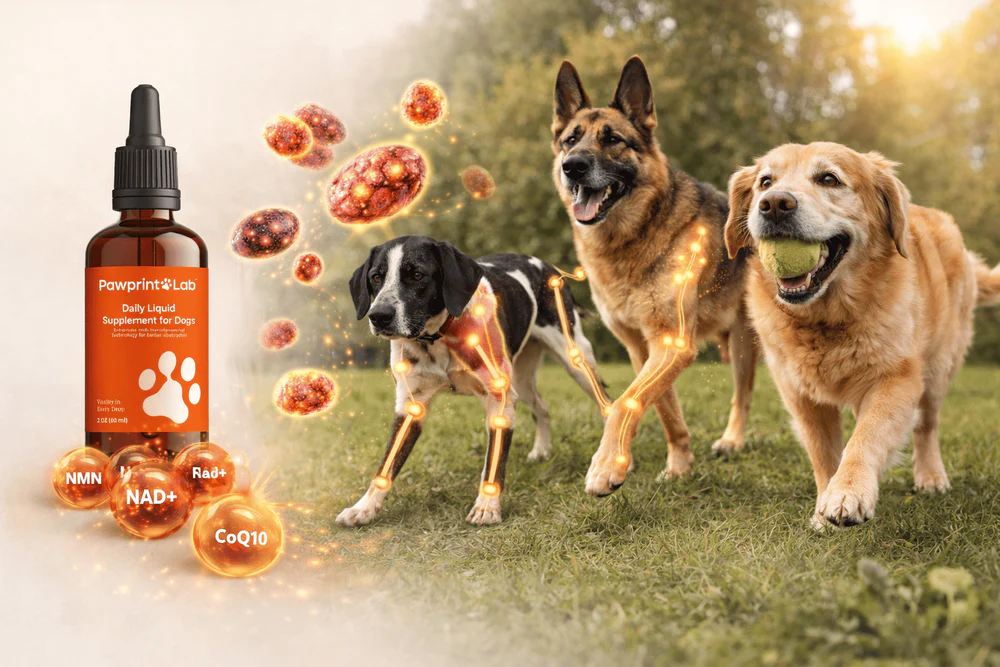
The result is Pawprint Protocol, a daily liquid drop built around four compounds that target cellular energy failure at the source:
The formula was only half the problem. Getting the compounds into the cells was the other half.
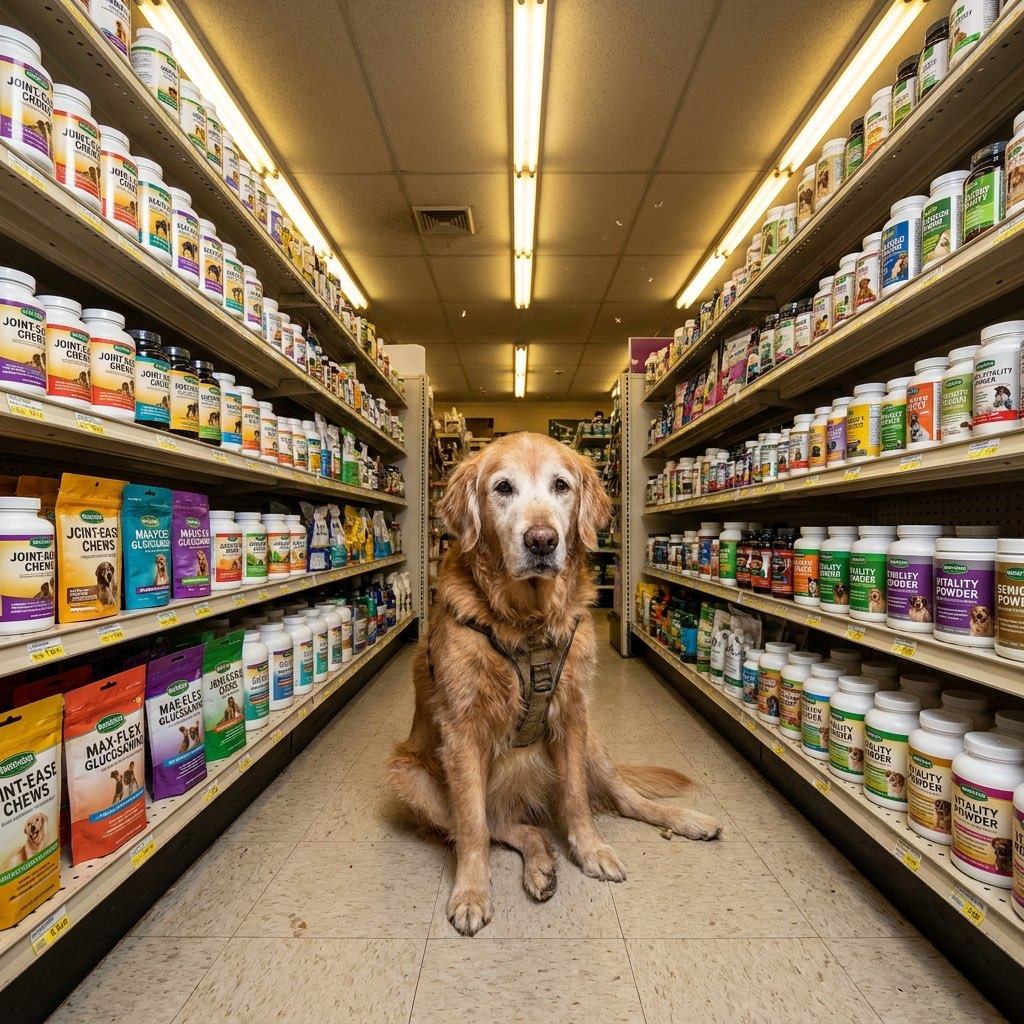
The $5 Billion Lie on the Pet Store Shelf
Most NMN supplements come in capsules, chews, or powders. Your dog's stomach acid destroys the compound before it absorbs. Studies put real-world absorption at less than 30%.
That's why so many dog parents try a supplement, see nothing change, and assume the whole category is a scam.
Meanwhile, the pet supplement industry sells $5 billion a year in glucosamine chews. Those support cartilage. They never touch the cellular energy failure driving the decline.
Most don't even contain a therapeutic dose.
The label looks right. The dose doesn't.
Pawprint Protocol uses nanoliposomal encapsulation. Each NMN molecule rides into the bloodstream wrapped in a microscopic protective shell that survives stomach acid.
Lab-tested absorption: 98%. Three times what standard pills deliver.
Nanoliposomal liquid costs 4x more to manufacture than a standard chew. The team could have shipped a cheaper capsule and kept better margins.
They built the version that reaches the cells instead.
What Changes Over the Next 90 Days
Most dog parents expect to see something within a week. Some do. Most don't see meaningful change until week three.
The cellular timeline over 90 days looks like this:
Cellular changes take time. We ask owners to commit to the full 90 days because that's the timeline at which the research and our customer feedback show consistent results.
If you don't see meaningful improvement by day 90, we refund every penny.
Three Owners on the Day Their Dog Came Back
"We'd accepted ramps everywhere. Today Bruno hopped into the car on his own. First time in two years. We cried in the driveway."
"I used to lift Daisy's back end like a suitcase handle. Now she launches up for the door and does our loop without stopping."
"My 17½ year old terrier has been on this for several weeks. He's much more alert, sundowning has stopped, far less wobbly in his hind legs, going up and down stairs with relative ease."
How to Tell It's Already Started
If you've seen any of these signs, cellular energy failure has already started. Two or more means it's accelerating:
The earlier you address the energy failure, the more strength your dog can rebuild. The longer it runs unchecked, the deeper the muscle and joint damage gets, and the harder it is to reverse.
What One Dropper a Day Actually Costs
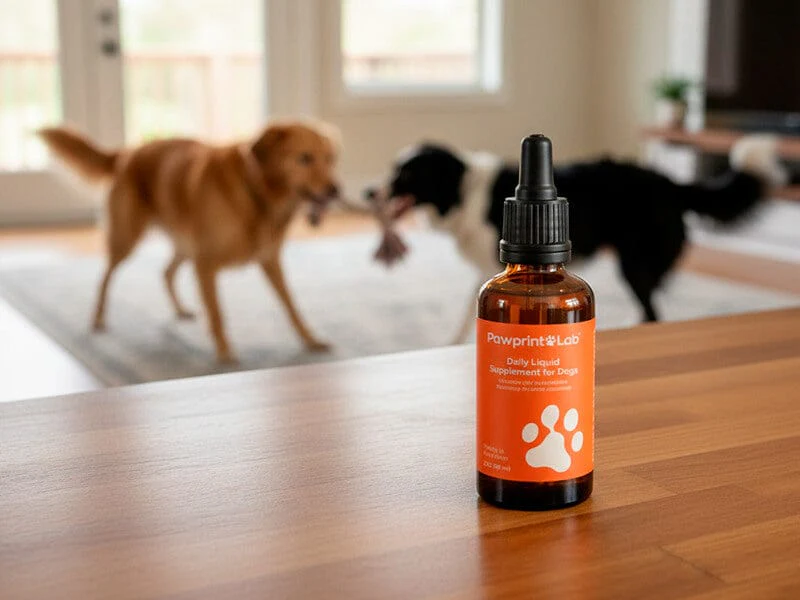
One dropper a day delivers the full cellular formula: NMN, NAD+, Resveratrol, and CoQ10, wrapped in the nanoliposomal shell that bypasses stomach acid.
Mixed into food once a day. The dog never notices it's there.
That works out to as little as $1.33 a day on the 6-bottle bundle.
Less than a single vet co-pay for a 90-day window that could change everything.
And if it doesn't work, you pay nothing.
Pawprint Protocol is backed by a 90-Day Healthy Years Guarantee. Use the full 90 days.
If your dog isn't visibly stronger, sharper, or more present at the end of that window, send the bottles back, full or empty, and we refund every penny.
Less than 1% of customers ever do.
Most senior decline reverses one ordinary morning at a time.
The head lifting off the bed when you walk in. The bark at the mailman that had gone quiet. The weight back on all four legs instead of three.
Small moments adding up to a dog who is, finally, themselves again.
Your dog's 90-day window is waiting.
15,000+ Senior Dogs Reactivated



90-Day Healthy Years Guarantee
Use Pawprint Protocol for 90 days. If your dog doesn't show visible improvement in mobility, energy, or alertness, send it back for a full refund.
You risk nothing. We risk everything.

Answers to Your Questions
Independent peer-reviewed research supporting the active ingredients and delivery technology used in Pawprint Protocol.
This page contains editorial content and paid promotion for Pawprint Protocol by Pawprint Lab. Individual results may vary. These statements have not been evaluated by the FDA. This product is not intended to diagnose, treat, cure, or prevent any disease. Consult your veterinarian if your dog is on prescription medication. Some testimonials may be compensated.