The Dentist Who Fits $2,000 Snoring Mouthpieces Keeps Telling Half His Patients to Start With Something Else
For 28 years he has built the custom mouthpieces dentistry considers the gold standard for snoring, and lately he gives the exhausted spouses in his chair advice that costs his own practice money. He agreed to explain why, on one condition.
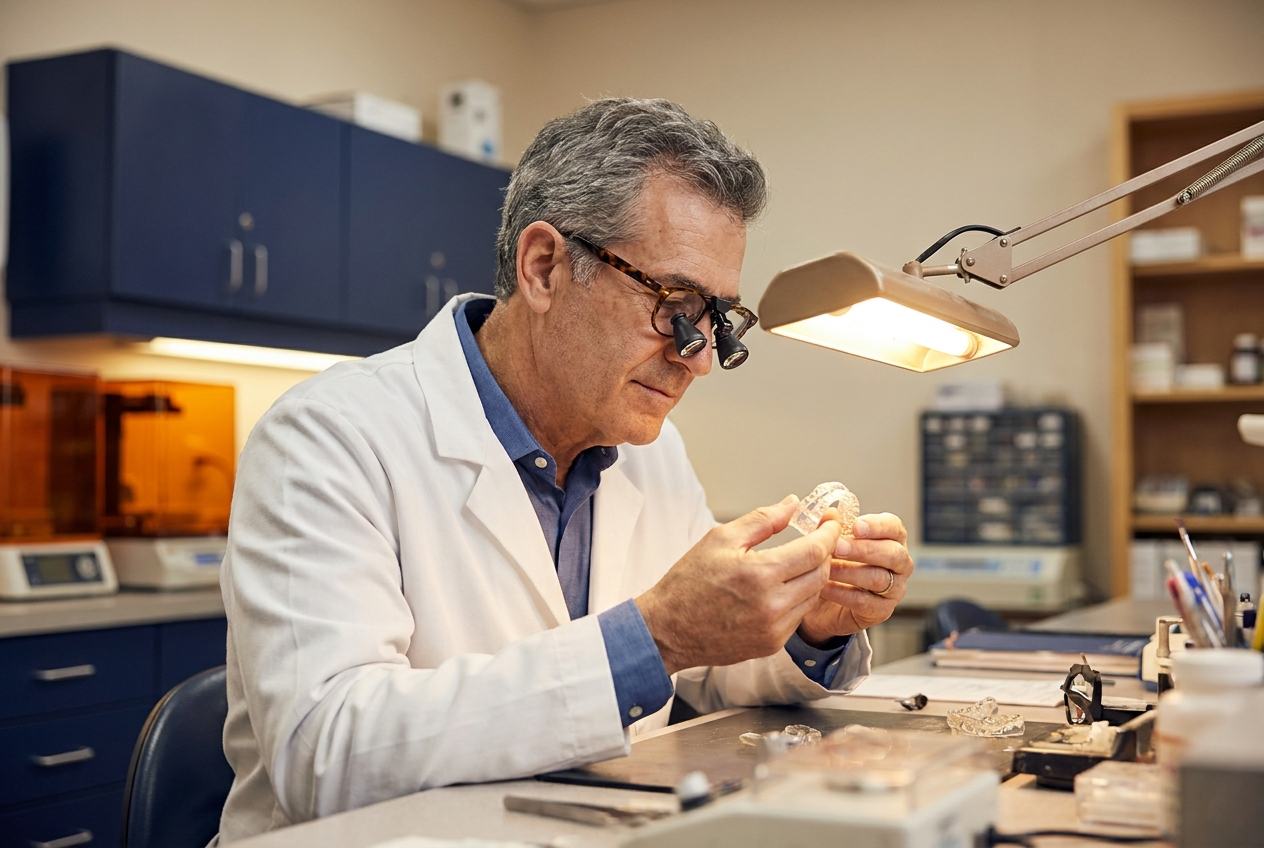
The mouthpiece the dentist slides across his lab bench is a small arc of clear acrylic, lighter than a house key.
"Between $1,500 and $2,000, depending on the lab and the number of adjustment visits," he says, without a flicker of apology.
Then comes the sentence that made us drive to Ohio.
"For about half the people who ask me for one, it is not where I tell them to start."
You will not read his name here. That was his one condition, because the labs and colleagues he works with live off the mouthpiece he is about to undercut.
We agreed to call him Dr. R., and he walked us through the reasoning, the millimeters, and the money.
Twenty-Eight Years of Jaws
Dr. R., 61, has run a general dental practice in suburban Ohio since 1998.
Snoring became a specialty he never advertised for. He estimates he has fitted several hundred custom mouthpieces, the devices that hold a sleeper's jaw forward through the night.
He talks about the work in millimeters.
"A millimeter short of the mark and nothing changes.
A millimeter past it and the joint aches by Thursday."
"Finding the quiet setting between those two mistakes is what my patients pay me for."
The Question That Waits for the Hygienist to Leave
Dr. R. says the snoring conversation almost never starts as a snoring appointment.
It leaks out sideways, during cleanings, and it comes from the other side of the bed.
"A wife waits until the hygienist leaves the room, and then she asks about her husband's snoring, not her own teeth.
She has been awake at two in the morning for years, and she is running out of polite ways to say so."
Published accounts from readers sound the same way.
One wrote: "There is one thing that ruins my plans, and I have absolutely no control over it: my husband's snoring."
He went looking at the numbers, and they startled him.
In one American Academy of Sleep Medicine survey, half of U.S. couples said they sometimes opt for a "sleep divorce," retreating to separate beds or separate rooms to get through the night.
Coverage of that survey on Today.com put the stakes in one line.
"When people love each other but dread bedtime together, something has to change."
The Drugstore Treats the Wrong Organ
Why did the strips and sprays in her nightstand drawer all fail?
His answer is about anatomy, not marketing. "Strips and sprays open the nose, and in most of the snorers I examine, the nose was never the problem."
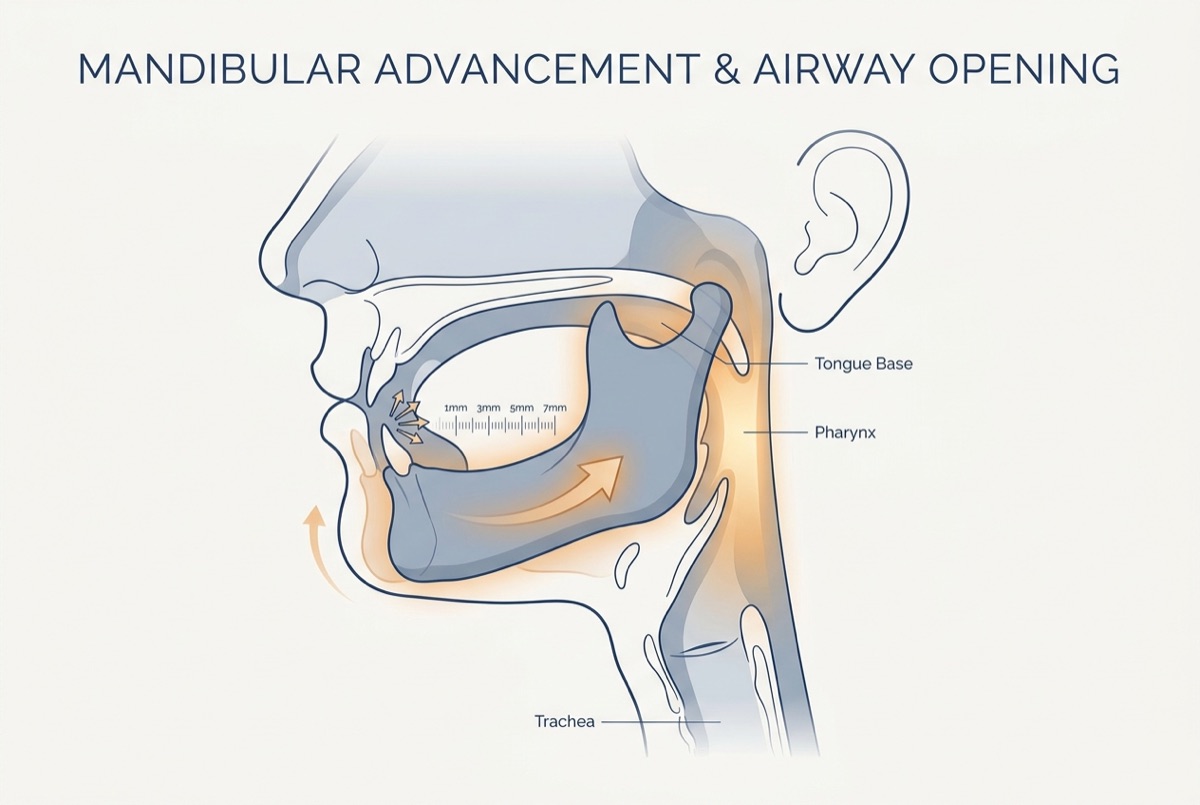
"During sleep, the muscles that position the jaw go slack, and the jaw drifts back.
The tissue at the back of the throat crowds inward, and air forcing through the gap sets that tissue vibrating like a reed."
So the products cheap enough to buy on impulse aim at the wrong organ, and the earplugs aim at the wrong person.
One wife wrote that her earplugs and headphones "either fall out of my ears, cause pain or simply don't muffle enough noise."
The one fix aimed at the right spot, the mouthpiece he builds, sits behind a four-figure quote.
He does not apologize for the number.
"The acrylic is cheap. The expensive part is me: the impressions, the lab, the adjustment visits.
It is honest work at an honest rate, and it prices out most of the households that need it."
What that price gate produces is the part that has soured him.
"A wife asks, hears the number, and goes home to think it over.
A year later she is still thinking it over from the guest room."
"The quote did not fix anything.
It only ended the conversation."
The $55 Device He Put on His Own Bench
The turn in his thinking started with his own patients.
They kept asking about the adjustable mouthpieces sold online, and he got tired of dismissing a device he had never held.
So he ordered the one that kept coming up in those questions, a $54.99 device called SnoreRX, and set it on the bench where his lab cases sit.
"I turned it over looking for the corner they cut, and I could not find it."
"The material takes a real impression of the teeth in hot water.
The calibrated adjuster moves the jaw in one-millimeter increments, and that increment is the unit I work in."
"I have seen lab invoices larger than $54.99 for a single remake.
My profession does not enjoy that comparison, which is one reason patients rarely hear it."
Millimeters, Not Miracles
Dr. R. is precise about what any device in this category does, at any price.
"You bring the jaw forward by a few millimeters, the throat stops collapsing, and the air passes quietly."
The custom mouthpiece and the $55 one reach that position by different roads.
His version starts with dental impressions and a milling lab.
The SnoreRX takes its impression in your kitchen: hot water softens the material, and biting down records the teeth.
The maker states the material "retains your unique impression for optimal fit, retention, and support."
Molded with care, in Dr. R.'s reading, it grips the way it should.
The adjuster is the feature he keeps coming back to, because it does the job his fitting appointments are for.
"When I tune a custom mouthpiece, I hunt for the quiet setting a millimeter at a time. This device hands that dial to the patient."
He is direct about the trade-offs, and he quotes users, not the brochure.
Some morning tooth awareness in the first days, he says, is the honest cost of entry for the whole category, custom mouthpieces included.
"The first couple of nights I experienced some tooth discomfort in the morning... After a couple of days, however, I found it went away."
Verified customer reviewWhat Comes Back From the Quiet Houses
Dr. R. now suggests the at-home version as a first step, and the reports that come back rarely mention millimeters.
They mention the first silent night, and what it made possible again.
The reader who wrote about lying awake dreading the noise ended her story somewhere else.
She described being "excited that we could enjoy sleeping next to each other again."
That, Dr. R. says, is the outcome the wives in his chair are buying, whatever the price point.
"Nobody in that seat has ever asked me for decibel data, but every one of them mentions the guest room."
The timeline is short.
Molding takes an evening. Published accounts describe quiet from the first night it is worn correctly, and the comfortable setting takes about a week to find.
His Standing Advice, Word for Word
The protocol he gives a first-time user fits in two sentences.
"Mold it carefully the first evening, and remold it if the first attempt is sloppy."
"Start at the lowest advancement setting, move one millimeter at a time until the house goes quiet, then stop."
He asked us to print one boundary.
"Snoring is a noise problem, and this device treats noise.
A sleeper who gasps, chokes, or stops breathing needs a doctor. Nothing that ships in a box replaces one."
As for what this does to his own business, he shrugs.
"The patients who need custom work still find me, and a $55 experiment that fails has cost a family one dinner out."
The Numbers Dr. R. Laid Out for Us
The device he named is the SnoreRX, an adjustable mouthpiece that molds to your own teeth at home. It is FDA-cleared, drug-free, battery-free, and made in the USA. He has no financial arrangement with the company, which is why we let him talk prices.
From the official site: a single SnoreRX costs $54.99. Two devices under the Buy 1 Get 1 50% Off package run $89.99, and the three-device Buy 2 Get 1 FREE package runs $119.98, which comes to $40 apiece.
His dry note on that last figure: all three devices together cost less than a tenth of the cheapest custom mouthpiece he fits.
The 30-Night Money-Back Guarantee attached to each order gives a household a full month of nights to test its new volume. If the house is not quieter, the maker refunds the purchase in full.
He tells patients to buy from the maker's own site. That is where the adjustable original ships from with its guarantee, and each link in this article points there.
His closing argument is the one he makes in the chair. A household can spend a year deciding on the custom quote, and that year is spent not sleeping. Thirty nights settles the question either way.
Package options and the 30-night guarantee are listed on the official SnoreRX site here.
Before we left, Dr. R. set the $2,000 mouthpiece and the question of his own margins side by side one last time.
"I still believe in custom work, but making a married couple wait for it is a different matter."
Then he went back to the bench, where a milled mouthpiece was waiting for a patient who could afford it.
Half the people who ask him never will, and as of this year, he has something to tell them anyway.
This page contains editorial content and paid promotion for SnoreRX. Individual results may vary. Names and stories are illustrative of common customer experiences. "Dr. R." is an illustrative expert persona composed from published clinical explanations of mandibular advancement and published customer accounts, not an identified practicing dentist; the scenes involving him are illustrative, and the customer quotes on this page come from published reader accounts and verified retail reviews, not from any dentist's patient records. SnoreRX has no verified named professional endorser, and no compensation relationship is claimed. SnoreRX is a snoring aid, not medical treatment; a reader who suspects sleep apnea or another sleep disorder should consult a licensed physician.
This product is not intended to diagnose, treat, cure or prevent any disease. The information provided on this site is for informational purposes only and is not intended as a substitute for advice from your physician or other health care professional.
More Stories
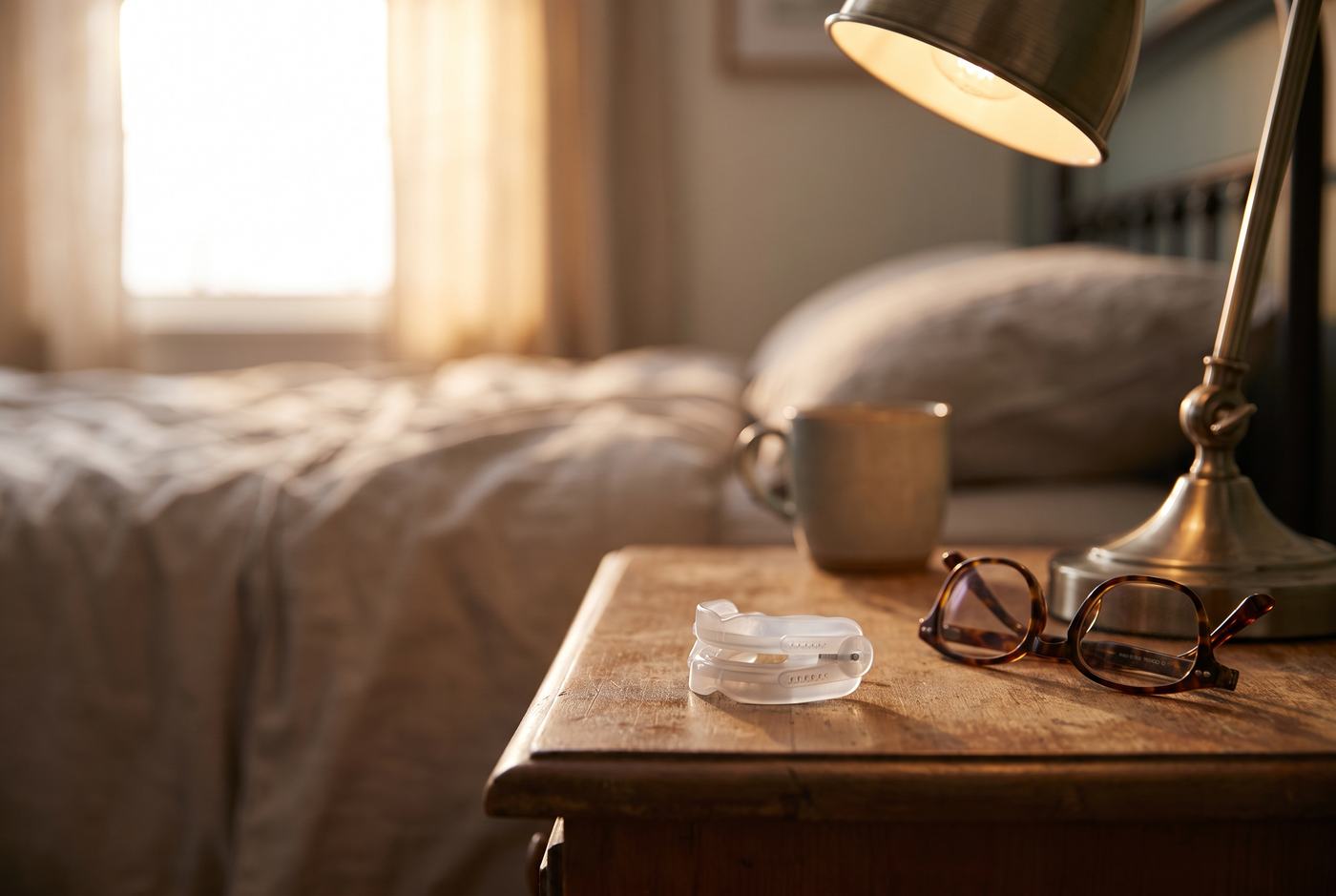
The Snoring Fix Dentists Charge Two Grand For Cost Me $54.99 at My Own Kitchen Sink

I Spent 4 Years and $418.22 Grading My Own Snoring Cures Before My Husband Pointed Out I Had Never Once Heard Myself Snore
Your Skincare Routine Has a Blind Spot. Dermatologists Confirm It.